The Power of Body Language in Public Speaking
Unlocking the secrets of non-verbal communication for a more impactful presence.

Introduction: More Than Just Words
When you speak, do your words tell the whole story? Research by Dr. Albert Mehrabian suggests that only a small percentage of communication is verbal. Non-verbal cues, like your body language, account for a staggering 55% of your message's impact. Mastering your body language isn't just about looking good; it's about authentic connection and effectively conveying your message, even before you utter a single word.
At Orator's Guild, we believe a holistic approach to public speaking includes understanding and leveraging every tool at your disposal. Let's delve into the key elements of powerful body language.
Element 1: Posture and Stance - Project Confidence
Your posture is the first thing an audience notices. A confident stance immediately signals authority and readiness. Stand tall, shoulders back, with your feet about shoulder-width apart. Avoid slouching, folding your arms, or shifting your weight nervously. Imagine a string pulling you gently upwards from the crown of your head. This open posture not only looks confident but also helps you breathe easier and project your voice more effectively.

Confident Stance
Feet shoulder-width apart, shoulders back, head held high. Command presence.

Open Body Language
Keep your torso open. Avoid crossed arms or defensive positions.
Element 2: Gestures - Amplify Your Message
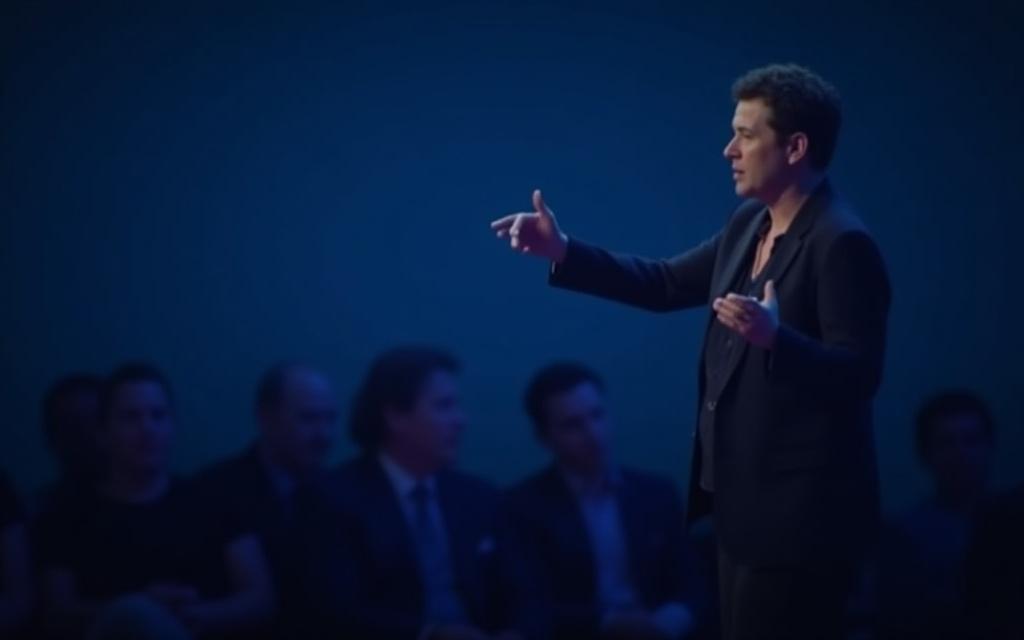
Purposeful hand gestures can add emphasis, illustrate points, and keep your audience engaged. Avoid fidgeting or repetitive, distracting movements. Instead, use gestures to reinforce your message. Open palms signal honesty and openness, while pointing can highlight an important detail. Practice natural, expansive movements that feel comfortable and authentic to you.
Element 3: Eye Contact - Connect and Engage
Eye contact is perhaps the most powerful tool for connection. It builds trust and shows sincerity. Instead of staring at one person, sweep your gaze across the entire audience, making brief contact with individuals for 2-3 seconds at a time. For larger crowds, divide the room into sections and shift your focus from one section to another. This creates the illusion that you are speaking directly to everyone.

Element 4: Facial Expressions - Mirror Your Message
Your face is a window to your emotions, and your expressions should align with the tone and content of your message. A genuine smile can disarm an audience, while a serious expression enhances gravity. Be mindful of your "resting face" and consciously animate your expressions to reflect confidence, enthusiasm, empathy, or seriousness as appropriate. Practice in front of a mirror to see how your expressions translate.

Ready to Master Your Presence?
Body language is a skill, and like any skill, it improves with practice and expert feedback. Don't let nervous habits detract from your powerful message.
Our personalized coaching sessions at Orator's Guild focus intensely on non-verbal communication, helping you develop a commanding, authentic, and memorable stage presence.
Explore Personalized Coaching